Salvage condition
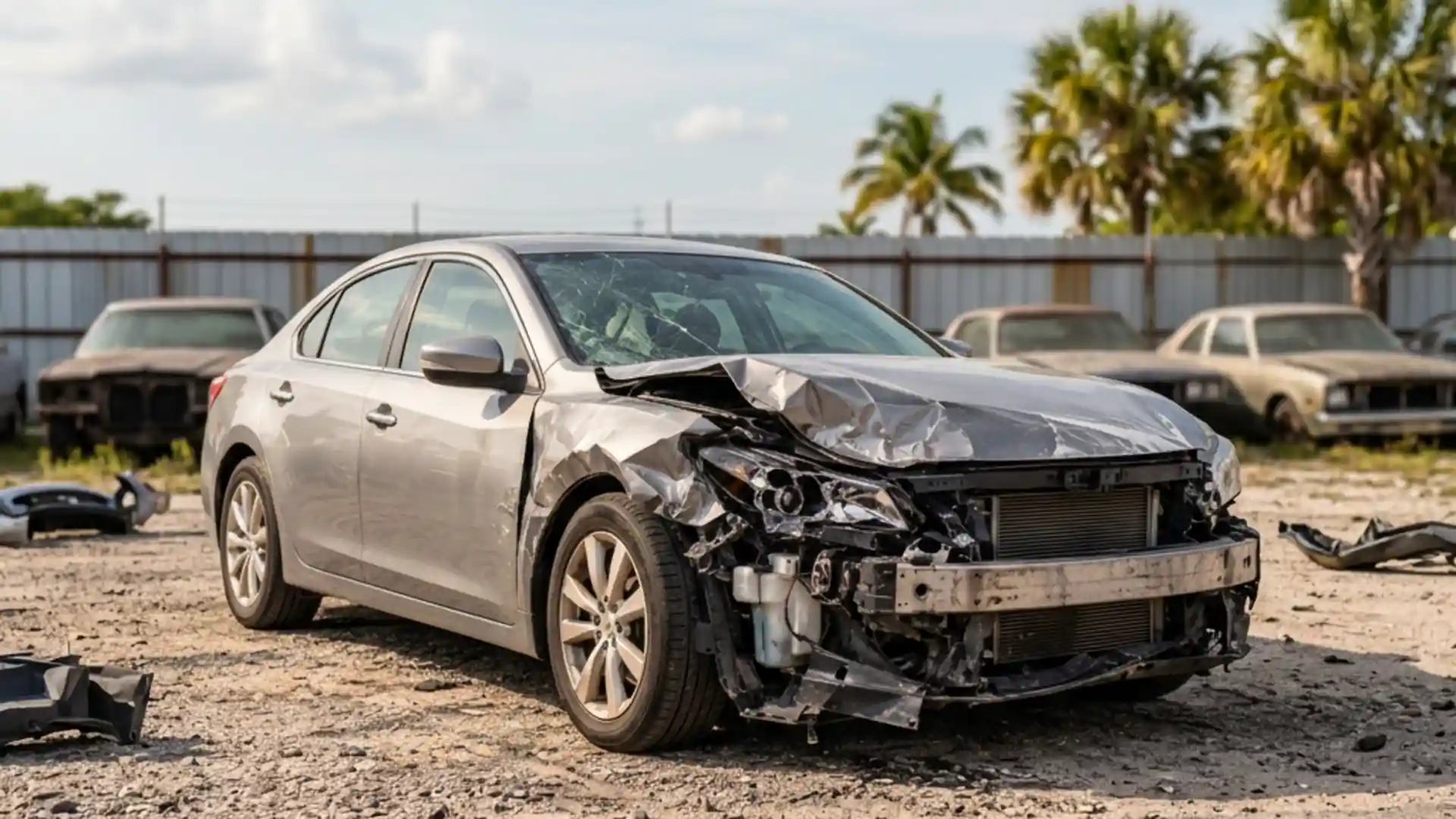
The extent of damage and whether the body and major parts are intact.
A vehicle can have value even when it no longer drives. We consider salvage condition and recoverable parts or materials when reviewing an unwanted car.
Want to go back? Return to the Services overview you were exploring.
Our Florida salvage credential is SD1128789. We hold it because much of what we review is salvage-grade: cars that are too damaged or too costly to repair.
Tell us what the vehicle is, what condition it is in and what paperwork you have. We explain how we look at it and discuss an offer.
The extent of damage and whether the body and major parts are intact.
Components or materials that may be recovered or recycled.
Title status and any paperwork questions.
Access to the vehicle for pickup planning.
Topics listed on our business profile for this category. They are conversation topics, not guarantees of price, speed or availability.
Tell us the condition and what is missing.
We consider salvage and recovery value and discuss an offer.
If agreed, we discuss paperwork and pickup.
A professional junk dealer operates within a highly specific niche focused entirely on the acquisition of unwanted vehicles. Unlike a general waste hauler or a residential scrap collector, this professional entity deals exclusively with the complexities of motorized transport. The primary objective is to evaluate the condition of a vehicle and determine its suitability for acquisition based on current market dynamics and recovery potential. In the Lake Worth area, engaging with a licensed buyer means you are working with an entity that understands the specific regulatory environment governing vehicle transfers and the logistical requirements of property-based collection.
When you approach a junk dealer, the interaction is structured around a transparent assessment of your vehicle. The process is not about cleaning out a garage of general household debris; it is a dedicated service for managing the lifecycle of an automobile that has reached the end of its functional road life. By focusing on cars rather than broad scrap, these professionals ensure that each inquiry receives an assessment tailored to the unique mechanical and structural status of the unit in question. Clear communication regarding the vehicle type and its physical state remains the cornerstone of every initial contact.
The evaluation of unwanted vehicles is a methodical process that relies heavily on the quality of information provided by the owner. When a vehicle is no longer capable of daily use, it often carries a history of mechanical failures, high mileage, or accident-related damage that influences the overall assessment. A professional buyer in Palm Beach County reviews these factors to understand the potential for secondary use of components or metallic materials. Because every vehicle possesses a different history, there is no standardized price point, and owners should expect a discussion regarding the specific attributes that define their individual car.
Owners are encouraged to be as detailed as possible when describing their property. Providing an accurate history of the vehicle—such as how long it has been sitting, its current mobility status, and any known major defects—allows the dealer to form an informed perspective. It is important to remember that this process is diagnostic in nature. By providing a clear picture of the car, you facilitate a more efficient conversation, ensuring that the expectations regarding the outcome of the assessment are grounded in reality rather than assumption or guesswork regarding the final offer.
One of the most frequent points of discussion involves the physical state of the unit, specifically regarding missing parts or stripped components. A scrap vehicle that is complete often presents a different set of considerations compared to one that has been partially dismantled. When significant parts are absent, the recovery potential of the car is reduced, which naturally impacts the scope of the potential acquisition. Being upfront about these missing parts is vital to maintaining a transparent relationship with the buyer, as it prevents surprises during the physical inspection process that occurs prior to the finalization of any deal.
Beyond individual components, the overall structural integrity of the car plays a significant role in how the vehicle is categorized for future processing. A vehicle that has been involved in a collision might have compromised frame members, whereas a car that has simply aged out of service may remain structurally sound. These distinctions matter deeply to a junk dealer who must account for the safe removal and handling of the material. Honest disclosure regarding structural damage ensures that the logistical plan for collection is safe and appropriate for the current state of the vehicle at your location.
Ownership verification is a non-negotiable step in the transaction process for any vehicle. In Florida, the presence of a clear title or appropriate documentation is essential for establishing the legal transfer of a vehicle. When you contact a professional regarding an unwanted car, be prepared to discuss the status of your paperwork. If there are questions regarding lienholders or lost documentation, addressing these early on is the most responsible way to proceed. Professionals in this field prioritize compliance, and they will need to ensure that the ownership chain is clear before any agreement can be reached.
While local regulations vary, the requirement for valid ownership evidence remains a consistent standard across Palm Beach County. Do not wait until the day of a scheduled pickup to resolve issues related to title or registration. Proactively verifying your documentation helps streamline the transition and prevents unnecessary delays. If you are dealing with a vehicle that was inherited or is part of a larger property estate, ensuring that you possess the legal authority to authorize the sale is critical. Clear communication about the paperwork you currently hold is the best path toward a smooth, finalized transaction.
The removal of an unwanted car from a private property involves careful coordination of logistical resources. Whether the vehicle is stored in a residential garage, a driveway, or an open parking lot, the physical accessibility of the location is a major factor in the collection planning process. Factors such as overhead clearance, narrow access gates, or soft ground can dictate the type of equipment needed for the collection. Providing an honest assessment of the collection environment in Lake Worth allows the buyer to prepare appropriately and ensure that the removal can be completed safely and without property damage.
It is also important to consider the status of the vehicle’s tires and steering, as these affect the ease with which a unit can be loaded. If a car cannot roll freely, this must be communicated during the initial consultation. The professional dealer relies on this information to determine the level of preparation required. By describing the site-specific obstacles and the current mobility of the car accurately, you help the service team arrive with the correct equipment, ultimately creating a more predictable and efficient experience for everyone involved in the appointment-based collection.
Managing expectations is essential when engaging with a professional vehicle buyer. It is common for owners to seek quick resolutions, yet it is important to understand that reliable service operates on an appointment-based system. While the goal is to provide a seamless process, promises of specific timing, such as same-day removal, are not standard guarantees and often depend on current scheduling and logistical capacity. Approaching the transaction with patience and a clear understanding of these operational realities will lead to a much more productive and satisfying outcome than expecting an immediate or automated service response.
Furthermore, it is helpful to distinguish between a professional purchase discussion and common misconceptions about junk-related services. This business is not a retail operation, nor does it function as an emergency roadside towing provider or a scrap yard open to the general public for parts hunting. Every interaction is focused on the professional acquisition of specific vehicles under agreed-upon terms. By maintaining a focus on the vehicle itself and keeping the communication channels clear and professional, owners can effectively navigate the sale process from the initial inquiry all the way through to the successful finalization.
Once you have gathered the necessary information about the condition, completeness, and documentation of your vehicle, you are ready to initiate the contact process. The best way to start is to clearly present the facts of the situation to the local office. Avoid the temptation to use vague language or generic inquiries. Instead, provide a concrete description of what you have and what you are looking to achieve. This professional approach respects the time of the buyer and ensures that you receive the most accurate and relevant feedback regarding the potential for an offer on your vehicle.
Remember that the journey to selling an unwanted vehicle is a straightforward, logical sequence: preparation, disclosure, assessment, and agreement. By following these steps and working with a licensed entity in the region, you can transition from holding an idle asset to completing a verified sale. Whether the car has been a long-term project or a recent addition to the unwanted category, a structured approach is the most effective way to navigate the market. When you are prepared, the process becomes a simple, clear, and professional transaction that respects both the owner and the vehicle's history.
We review them. Our salvage credential is SD1128789. Describe the vehicle and we will tell you whether we can make an offer.
Recoverable parts and materials are part of how we consider a vehicle. We explain our thinking when we discuss an offer.
Pickup timing depends on location, vehicle condition and scheduling. We do not promise same-day service; ask when you call.
No. We review your vehicle individually and explain the offer we can make.
Tell us what you have. We will review it with you and discuss a clear next step.
Choose a Palm Beach County community for local points of interest, a map and area-specific information. Each guide includes a link back to this service page. Confirm availability for your exact location on a call.